

>>>DOWNLOAD FULL MANUAL HERE<<<
Babywearing can make everyday life easier while helping you keep your baby close.
But getting the fit right matters.
A baby carrier should hold your baby high, snug and securely supported while keeping their face and airway visible and unobstructed at all times.
Before using your Tiny Table Embrace Baby Carrier, please read the full Baby Carrier Instruction & Safety Manual above. This guide is designed to make the most important babywearing safety principles easy to understand and remember.
Before You Start
The Tiny Table Embrace Baby Carrier has an approved child use range of 3.2 kg to 15 kg.
Weight alone does not determine whether a baby is ready for the carrier.
Your baby must also be able to achieve a secure, upright fit where:
- their face is fully visible
- their nose and mouth remain unobstructed
- their chin stays clear of their chest
- their back is securely supported
- they sit high and snug against your body
- their thighs are comfortably supported
If you cannot achieve this position, stop using the carrier and try again when a safe fit can be achieved.
Babies younger than four months, babies born prematurely, babies with low birth weight and babies with breathing difficulties may be at greater risk of suffocation while using a carrier. If this applies to your baby, or you have concerns about their suitability for babywearing, speak with an appropriate healthcare professional before use.
Check Your Carrier Before Every Use
Safe babywearing also means checking the carrier itself.
Before every use, inspect:
- buckles
- shoulder straps
- waistband
- stitching
- seams
- snaps
- fasteners
- fabric
Make sure every buckle securely clicks into place and cannot be pulled apart.
Stop using the carrier immediately if you notice:
- damaged or cracked components
- loose stitching
- tears
- fraying
- excessive wear
- missing parts
- a buckle or fastener that does not work correctly
Do not attempt to repair or modify structural parts of the carrier yourself.
If you're unsure whether your carrier is safe to continue using, stop using it and contact Tiny Table Support.
How to set up your carrier properly


1. Start With the Waistband
Place the waistband snugly around your waist, above your hip bones.
For smaller babies, the waistband may need to sit higher on your body so your baby can remain high enough to easily see and monitor.
Make sure the waistband is secure and the internal hook-and-loop fastener is completely aligned.
2. Adjust the Seat Width
The Embrace Baby Carrier has an adjustable seat that can be made narrower or wider to suit your baby's size.
For smaller babies, begin with a narrower setting.
As your baby grows, gradually increase the seat width so their thighs remain comfortably supported.
The seat should not:
- extend excessively beyond your baby's knee creases
- force their legs too far apart
- leave their thighs unsupported
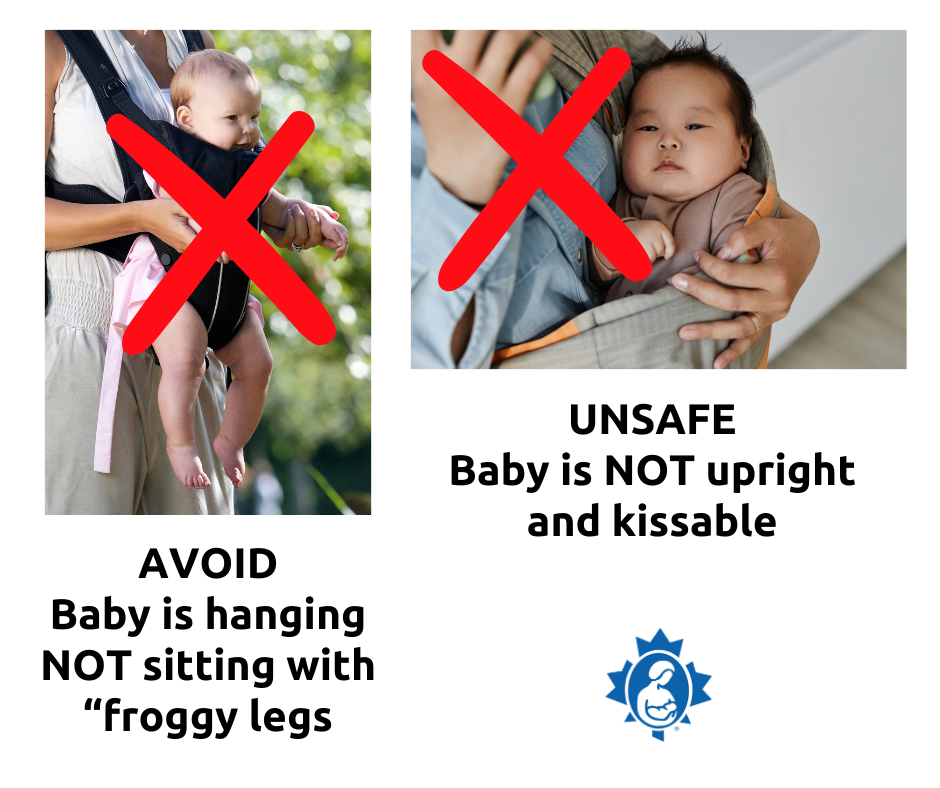
- allow their legs to hang straight down
Age alone does not determine the correct seat setting. Your baby's size, development and positioning matter too.
3. Position Your Baby
For inward-facing carrying, hold your baby securely against your chest while bringing the carrier panel up over their back.
Keep one hand supporting your baby while fastening and tightening the carrier.
Your baby should settle into a comfortable seated position with their thighs supported and their knees positioned higher than their bottom.
4. Secure the Shoulder Straps
Before you begin, make sure both shoulder straps are loosened.
- Place the right shoulder strap over your right shoulder and across your back.
- Connect the right strap buckle into the left-side buckle until you hear a click.
- Hold your baby against your chest facing inward.
- Guide one of your baby’s legs through the carrier opening.
- Place the left shoulder strap over your left shoulder and across your back.
- Connect the left strap buckle into the right-side buckle until it clicks. Making an “X” shape on the back
- Tighten both shoulder straps until your baby feels snug and secure against your body.
3. Support the head and neck
- Use built-in support panel
- Especially in the first 6–8 weeks
- Keep support firm, but not restrictive
The T.I.C.K.S. Rules for Safe Babywearing
If you remember one thing when babywearing, remember T.I.C.K.S.
T — Tight
Your carrier should be snug enough to hold your baby securely against your body and prevent them from slumping.
It should not be so tight that your baby's face is pressed against your body or the carrier fabric.
I — In View at All Times
You should always be able to see your baby's face simply by looking down.
Their face, nose and mouth must remain uncovered and unobstructed.
Never allow carrier fabric, clothing, blankets or accessories to cover your baby's face.
C — Close Enough to Kiss
Your baby should sit high enough on your body that you can easily kiss the top of their head without straining.
If your baby is sitting too low, adjust the waistband and shoulder straps before continuing.
K — Keep Chin Off Chest
Your baby's chin must remain up and away from their chest.
Never allow your baby to slump forward into a position where their chin rests against their chest, as this can restrict their breathing.
S — Supported Back
Your baby should remain upright with their back securely supported.
When inward-facing, their chest and tummy should rest against you while the carrier holds them close enough to prevent slumping.
The Most Important Airway Check
Your baby's airway should be easy to monitor at all times.
Regularly check that:
- you can clearly see their face
- their nose and mouth are uncovered
- their chin is not resting against their chest
- their head has not slumped forward
- their face is not pressed against your body or carrier fabric
- they remain upright and securely supported
Do not rely on your baby crying or making noise to tell you something is wrong. Babies experiencing breathing difficulty may not always make obvious sounds or movements.
Getting the Leg and Hip Position Right
Your baby's thighs should be comfortably supported by the carrier.
When inward-facing, aim for a comfortable seated position where the knees sit higher than the bottom rather than allowing the legs to hang straight down.
The carrier seat should support your baby's thighs without forcing their legs wider than is comfortable for them.
If the seat looks too wide or too narrow, stop and adjust the internal seat setting before continuing.

Using the Neck Support Panel
The Embrace Baby Carrier includes an adjustable neck support panel.
It can be positioned down, halfway or fully up depending on your baby's development and support needs.
Whichever position you use:
your baby's face, nose and mouth must remain visible and unobstructed.
Never use the neck panel to cover your baby's face or create an enclosed space around their head.
Outward-Facing Babywearing
Outward-facing carrying should only be used once your baby is developmentally ready.
For the Tiny Table Embrace Baby Carrier, outward-facing is suitable from approximately 6 months+ and only when your baby has strong, consistent head and neck control.
Your baby should be able to maintain their head position without wobbling or slumping.
When carrying outward-facing:
- keep your baby high, upright and snug
- make sure their face and airway remain unobstructed
- ensure their back is securely supported against you
- properly support their thighs
- never allow them to sleep outward-facing
- immediately turn them inward if they become sleepy, tired, distressed or begin to slump
Use outward-facing carrying for short periods and regularly monitor your baby's comfort and position.
Back Carrying
Back carrying is an advanced babywearing position.
Only use the back-carry position once your baby:
- is at least 6 months+
- can sit independently
- has strong, consistent head and neck control
- has strong torso control
When learning to back carry, practise at home and have another adult assist you.
Keep one hand securely supporting your child until the waistband and both shoulder straps are fully fastened and tightened.
Use a mirror or ask another adult to check your baby's position.
Your child should remain high, snug and securely supported with their airway unobstructed.
Activities to Avoid While Babywearing
A baby carrier changes your centre of gravity and can affect your balance.
Do not use the carrier while:
- running
- cycling
- swimming
- skiing
- participating in sports or high-impact activities
- driving or riding in a motor vehicle
- cooking over heat or an open flame
- handling hot liquids
- handling hazardous chemicals
Take extra care while walking, bending or leaning.
When you need to bend down, bend at your knees rather than bending forward at your waist.
Only use the carrier when you are awake, alert and able to give your baby your full attention.
Your Quick Safety Check Before You Go
Before you start walking, check:
Can I clearly see my baby's face?
Is their nose and mouth unobstructed?
Is their chin up and clear of their chest?
Are they high enough for me to easily kiss their head?
Are they snug against me without slumping?
Is their back securely supported?
Are their thighs comfortably supported?
Are every buckle, strap and fastener securely attached?
If any part of the fit doesn't look or feel right, stop and reposition your baby before continuing.
Safe Babywearing Starts With the Right Fit
Babywearing shouldn't feel complicated.
The essentials come back to the same things every time:
Keep baby high. Keep them snug. Keep their face visible. Keep their airway clear. Keep their back supported.
Take a few moments to check your baby's position each time you put the carrier on, and continue checking them while you wear them.
If you've just received your Tiny Table Embrace Baby Carrier, use the full Instruction & Safety Manual at the top of this page alongside this guide while you're learning the fit.
And if you're ever unsure, stop using the carrier and contact Tiny Table Support before continuing.
WARNING: Incorrect use of this carrier may result in serious injury or suffocation. Always read and follow the supplied Instruction & Safety Manual before use.